- Definition and Issues
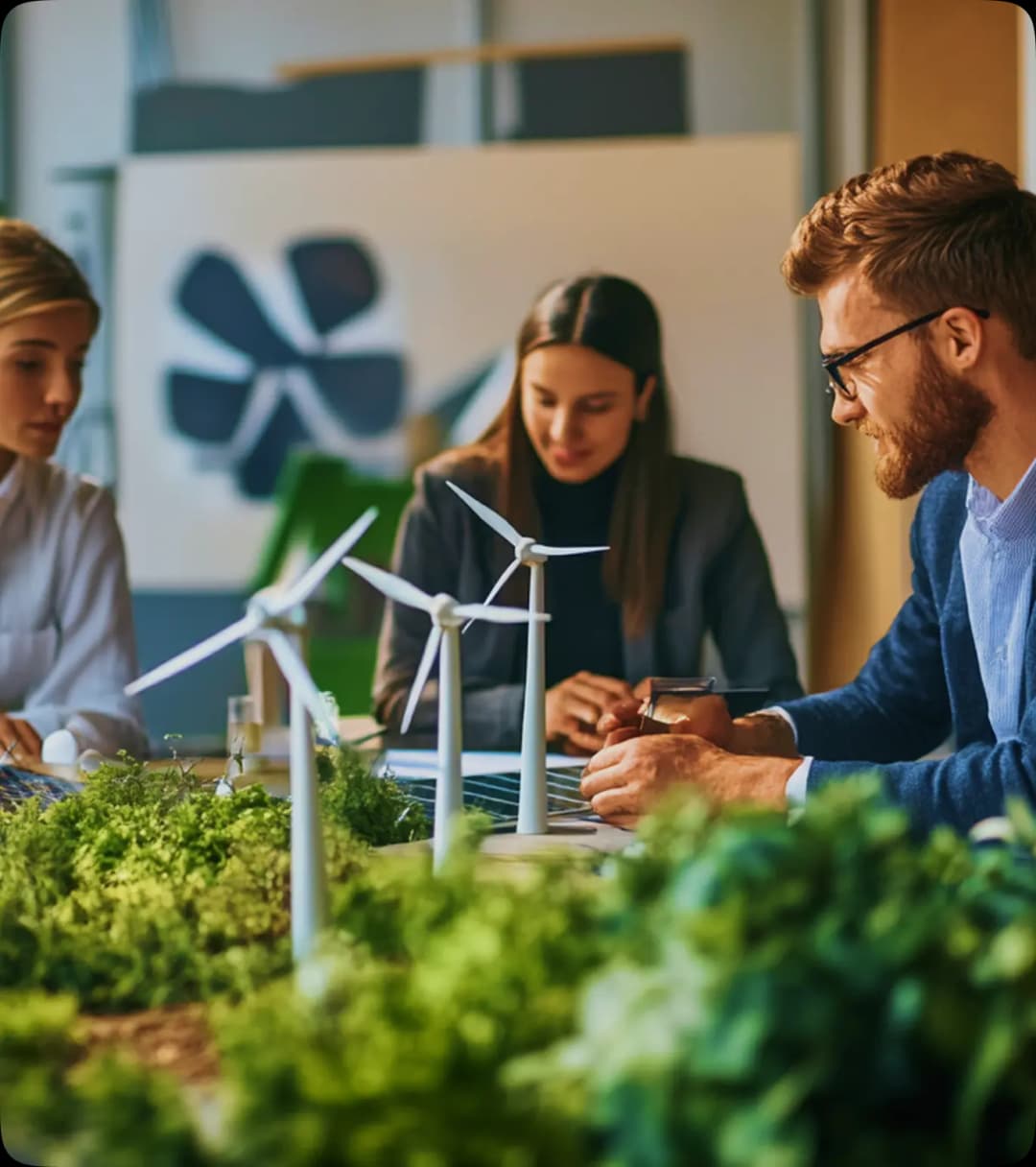
The “Business Model and Value Chain” pillar concerns the way in which a company creates, delivers and captures value, by integrating circular economy principles.
This includes in particular:
- the design of the offering (products/services)
- relationships with suppliers and partners
- the management of product life cycles (lifespan, repair, reuse…)
For a micro or small-to-medium enterprise, working on this pillar does not mean transforming everything immediately, but rather progressively evolving its model to make it more sustainable, more resilient and less dependent on virgin resources.
Key issues:
- Reducing dependence on raw materials
- Creating new revenue streams
- Meeting customer expectations (sustainability, transparency)
- Strengthening resilience in the face of crises (rising costs, shortages…)
- What does a good score mean?
A high score on this pillar indicates that the company has already begun to integrate circular logic into its business model and value chain.
In practical terms:
- The offering includes products/services that are durable, repairable or reusable
- The company works with committed partners (responsible suppliers, short supply chains…)
- It explores or implements alternative models (leasing, reuse, second-hand…)
- It has good visibility over its value chain (upstream and downstream)
- It is beginning to transform environmental constraints into business opportunities
The company is no longer content simply to sell a product: it considers its use and its life cycle.
- What does a low score mean?
A low score means that the business model still relies primarily on a classic linear logic: produce, sell, discard.
This may manifest as:
- A strong dependence on virgin raw materials
- Little visibility into suppliers’ practices
- An offering that is poorly differentiated on environmental issues
- A lack of consideration for the lifespan or end-of-life of products
- Vulnerability to rising costs or supply disruptions
The company may miss diversification opportunities and remain exposed to growing economic risks.
- Priority action areas
1) Map your value chain
Identify the main stages (procurement, production, distribution, end of life) and the stakeholders involved.
Example: a textile company lists its suppliers, its modes of transport and the end-of-life solutions for its products.
2) Identify ways to reduce impacts
Pinpoint the most impactful stages (materials, transport, packaging…) and consider alternatives.
Example: replacing plastic packaging with a recyclable or reusable solution.
3) Progressively evolve your offering
Integrate sustainability criteria into the products or services on offer.
Example: offering a range of repairable products or products with available spare parts.
4) Test a circular model on a small scale
Experiment with new approaches without overhauling the entire model.
Example: launching a take-back or resale service for second-hand products.
5) Engage in dialogue with your suppliers
Begin integrating environmental criteria into supplier relationships.
Example: asking simple questions about the origin of materials or production practices.
6) Highlight existing practices to customers
Communicate about efforts already made to strengthen perceived value.
Example: clearly displaying the local origin of products or the commitments undertaken.
- Expected benefits
Working on your business model opens up new perspectives while securing your activity.
In the short term:
- Better understanding of how your business operates
- Identification of quick optimisation opportunities
- Recognition of already existing practices
In the medium term:
- Differentiation in the market
- Loyalty from customers sensitive to sustainability issues
- Reduction of certain costs (materials, transport…)
In the long term:
- A more resilient and adaptable model
- Creation of new revenue streams
- Better integration into local and circular ecosystems



 Resources
 6/17/2026•
 3-minute read